
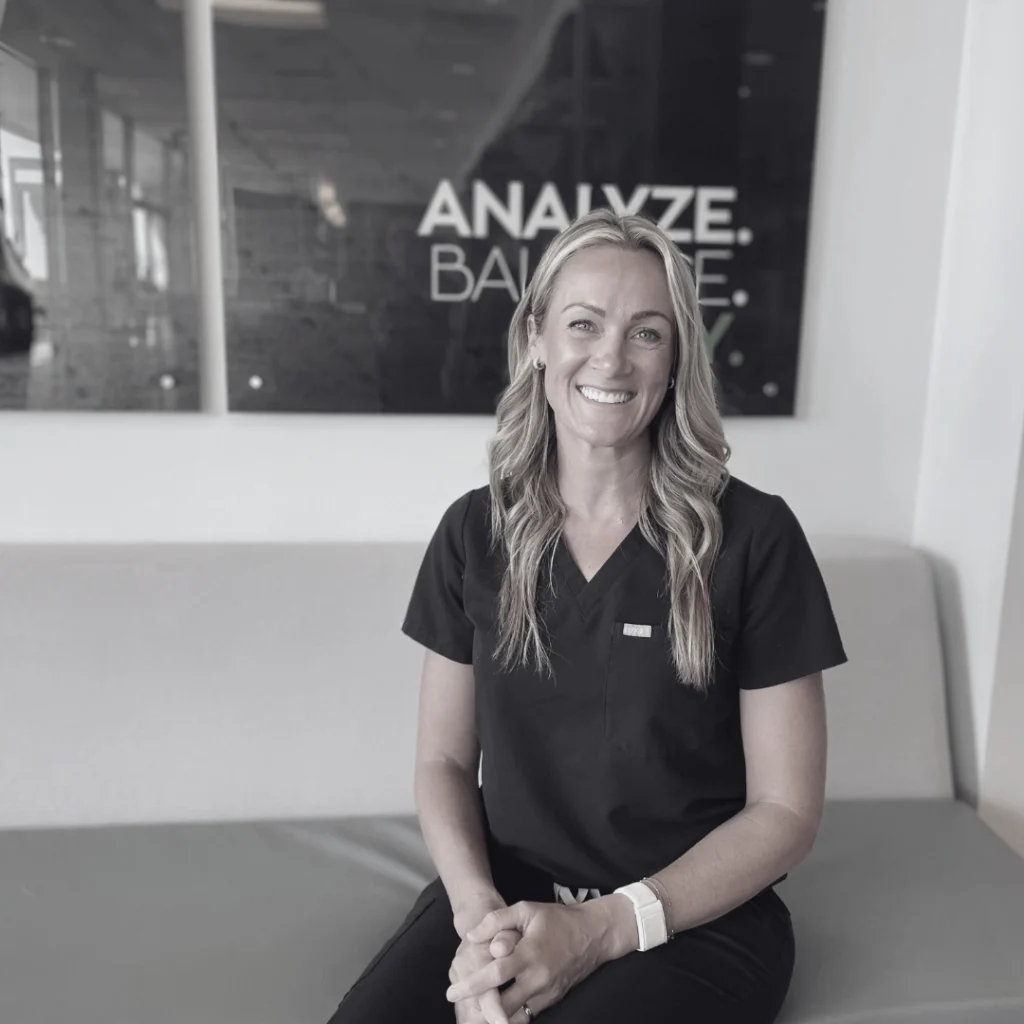
PROVIDER EXPERIENCE MATTERS MORE THAN EVER: THE FUTURE OF HEALTHCARE DEPENDS ON IT
When healthcare organizations talk about improving outcomes, the conversation often centers on patients. How do we improve access? How do we improve satisfaction? How do we improve results?
These questions matter. But they may not tell the whole story. There is another question healthcare rarely asks:
What kind of environment allows providers to do their best work?
This is one of the most important, and most overlooked, questions in modern healthcare, and this sits at the very heart of why Structural Elements® was built.
We were founded on the belief that better patient outcomes begin with creating better environments for providers to practice. For many providers, the traditional healthcare landscape presents two choices: remain within increasingly complex reimbursement-driven systems or leave and attempt to build a practice entirely on their own.
Our Founder, Doug Bertram, built Structural Elements® with a clear vision of a better option. One that allows providers to focus on patient care while operating within a system designed to support them. One that provides the infrastructure, administrative support, operational systems, collaborative environment, and shared standards needed to succeed without requiring providers to build everything from scratch.
Providers do not operate in a vacuum. The systems they work within influence how they communicate, collaborate, make decisions, and ultimately care for patients. When those systems support providers, patients benefit. When those systems create unnecessary complexity, everyone feels the effects.
This is why we believe one of healthcare’s biggest blind spots is the assumption that better outcomes come primarily from finding better providers. Expertise matters, but expertise alone is not enough. Great providers need systems that allow them to apply that expertise consistently, collaboratively, and effectively.
THE MYTH OF THE HERO PROVIDER
Healthcare has long been built around the idea that individual excellence is the primary driver of patient outcomes. Find the best doctor. The best therapist. The best specialist.
While expertise is undeniably important, this perspective overlooks a critical reality: even exceptional providers can struggle when they are working within systems that compete for their attention.
Most providers enter healthcare because they want to help people. Yet very quickly, many find themselves navigating administrative burdens, documentation requirements, productivity expectations, reimbursement challenges, scheduling demands, and operational responsibilities that have little to do with patient care.
The issue is rarely a lack of motivation. More often, it is the environment surrounding that expertise.
Structural Elements® is a system that amplifies great providers’ strengths rather than distracting from them. The future of healthcare depends not only on attracting talented providers, but on creating environments where they can spend more time focused on patients and less time navigating complexity.
IS HEALTHCARE FOCUSING ON THE WRONG THINGS?
For decades, healthcare has invested heavily in specialization, technology, documentation, reimbursement systems, and operational efficiency. These investments have produced remarkable advancements in medicine and improved countless outcomes. But many of the systems surrounding healthcare were designed to optimize transactions rather than coordination.
Providers are often measured by productivity. Organizations are often evaluated by efficiency. Yet the factors that may have the greatest influence on long-term outcomes such as communication, continuity, collaboration, and shared decision-making can be far more difficult to measure and therefore receive far less attention.
The result is a healthcare system filled with extraordinary expertise that often struggles to create extraordinary experiences.
Patients frequently encounter disconnected recommendations, fragmented care journeys, and uncertainty about what comes next. Providers work hard to create meaningful outcomes, yet many do so within systems that make collaboration more difficult than it should be.
Healthcare’s next evolution will not come from adding more complexity. It will come from creating better alignment.
CULTURE IS A CLINICAL VARIABLE
When people hear the word culture, they often think about workplace satisfaction, employee engagement, or organizational values. While those things matter, culture influences far more than the employee experience.
Culture shapes how providers communicate with one another. It influences whether collaboration is encouraged or avoided. It affects how knowledge is shared, how decisions are made, and how patients move through care. In many ways, culture functions as an invisible force behind the patient experience.
Patients may never see the conversations happening behind the scenes. They may never witness the relationships between providers or understand the systems that support decision-making. Yet they experience the results every time care feels coordinated, recommendations feel aligned, and the next step feels clear.
This is why culture should be viewed as a clinical variable.
Organizations that create strong cultures do more than improve workplace satisfaction. They create environments where providers can do their best work, and where patients ultimately receive better care because of it.
WHY SHARED STANDARDS MATTER
One of the strongest myths in healthcare is that collaboration happens naturally when talented people work together. It doesn’t. Collaboration requires structure.
It requires shared standards, shared language, and a shared philosophy that helps providers understand not only their role, but how their role connects to the larger patient journey.
At Structural Elements®, we believe providers should spend their time providing care, not building infrastructure around it. That belief has shaped every aspect of our model.
Providers operate within a system that supplies the environment, operational support, technology, marketing, administrative infrastructure, and collaborative framework needed to help them succeed. Rather than asking providers to solve every challenge independently, we create systems that allow them to focus their energy where it creates the greatest value: helping patients.
Providers from different disciplines receive additional training in the proprietary Structural Elements® framework and operate from a shared lens. While their expertise varies, their understanding of structure, movement, recovery, adaptation, and long-term health remains aligned. The result is not less individuality, rather it is expertise working together with greater purpose.
A BETTER FUTURE FOR PATIENTS AND PROVIDERS
The future of healthcare will not be determined solely by new technologies, new treatments, or new credentials. Those things matter, but the organizations that lead the next generation of healthcare will recognize something equally important: patient outcomes improve when providers are supported by systems designed to help them succeed.
Providers want to spend more time helping people and less time navigating unnecessary complexity. Patients want care that feels coordinated, intentional, and easier to navigate. Organizations want sustainable models that create value for everyone involved.
These goals are not separate, but rather are deeply connected.
Healthcare works best when providers can focus on patients, organizations can focus on support, and everyone is aligned around a common goal: creating meaningful, sustainable outcomes for the people they serve.
That belief is not just part of our model. It is why Structural Elements® exists. Because provider experience matters more than ever. And the future of healthcare depends on it.