
BUILT ON STRUCTURE. GROUNDED IN FASCIA.
We’ve heard it time and time again.
“Oh, you’re a medical clinic? I thought you were an engineering firm.”
Yes, we are engineers. But of the human body.
It’s no coincidence that we’re called Structural Elements®. Our name, our logo, and our proprietary (se)® System were intentionally built around the engineering principle of tensegrity, which describes how structures maintain stability through the relationship between tension and compression.
Applied to the human body, this concept is known as biotensegrity. It offers a framework for understanding how our interconnected structures distribute forces, maintain stability, and adapt to movement. Central to that understanding is fascia, the connective tissue network that helps hold our bodies together.
Fascia has become something of a buzzword across healthcare, fitness, and wellness. But at Structural Elements®, fascia isn’t a new discovery or the latest trend we’re incorporating into our services. It’s our specialty. It’s what we treat. And it’s the foundation of our proprietary (se)® Treatment.
FASCIA: THE FOUNDATION OF OUR WORK
When most people think about human structure, they picture bones providing support and muscles creating movement. But there’s another essential component connecting these structures and helping them function together.
Fascia is an extensive, three-dimensional network of connective tissue that surrounds, connects, and supports muscles, bones, nerves, organs, and other structures throughout the body. Once thought of primarily as passive tissue, fascia is increasingly recognized for its structural, mechanical, and sensory functions. Some researchers even consider it a body-wide organ system.
Fascia helps us move, sense our body’s position, and adapt to everyday demands. When tension builds or movement becomes restricted, changes in one area may influence another, contributing to discomfort and compensation patterns throughout the body.
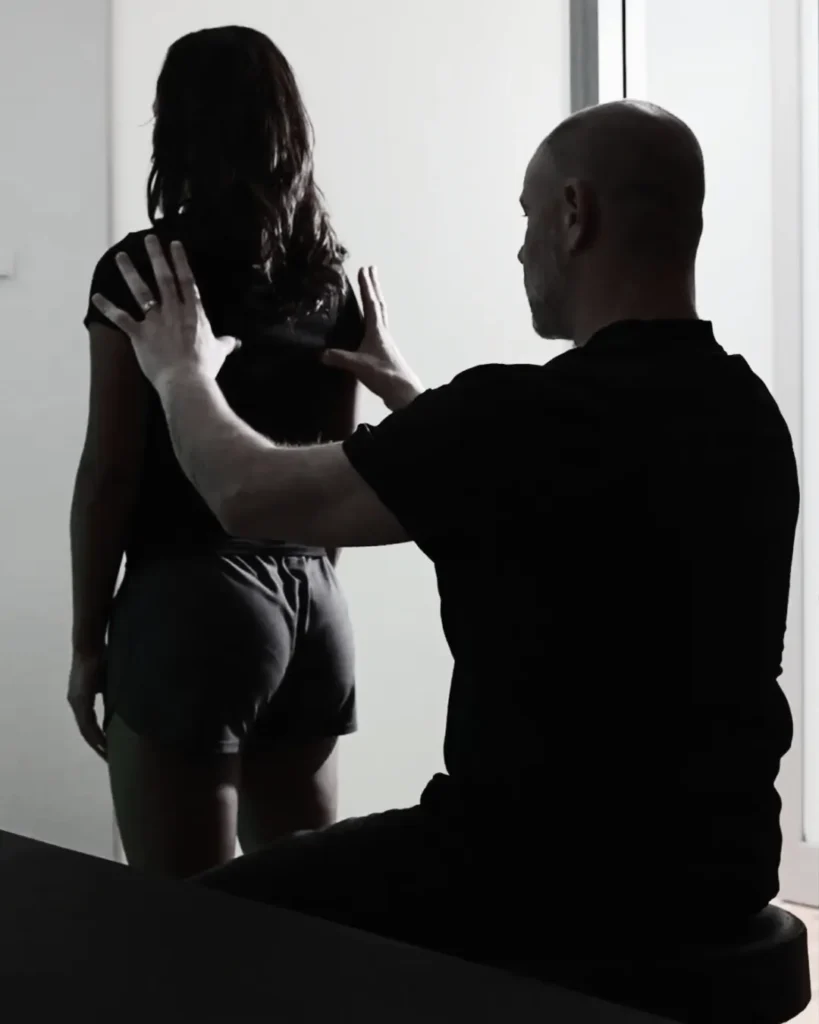
Our proprietary (se)® Treatment is rooted in myofascial release and structural bodywork. Using the (se)® Mapping System, (se)® practitioners learn to assess patterns of tension and structural imbalance throughout the body, looking beyond the immediate location of symptoms to better understand the relationships influencing them.
We are fascia experts. And that expertise extends across every service we offer. From (se)® Treatment and (se)® DTR to Pilates, training, recovery, IV Therapy, and beyond, every provider is trained to understand fascia and its role in the body’s interconnected systems. Each discipline brings its own expertise, but all share the same foundational understanding of human structure. This is what connects our services and defines our integrated approach to Orthopedic Wellness.
FROM STRUCTURAL THINKING TO THE (se)® TREATMENT
Our Founder, Doug Bertram, began his clinical career in 1995 as a massage therapist, working with athletic injuries and studying myofascial release and structural bodywork. He became increasingly interested in how fascial tension and compensation patterns influenced movement and why treating the location of pain didn’t always resolve the larger problem.
His pursuit of a deeper understanding of the body ultimately led him to graduate studies in Traditional Chinese Medicine, where he explored additional perspectives on balance, interconnection, and the body’s ability to regulate itself.
Drawing on his background in myofascial release, structural bodywork, and Traditional Chinese Medicine, Doug identified parallels between the meridian pathways described in Chinese medicine and the fascial planes recognized in Western anatomy. He brought this insight together with his understanding of biomechanics and tensegrity, developing his own framework for assessing and treating the body’s interconnected structures.
In 2007, having completed his graduate studies, Doug attended the first International Fascia Research Congress at Harvard Medical School, joining researchers, educators, and clinicians from around the world exploring fascia’s structure, function, and clinical significance.
This integration of Eastern and Western perspectives became central to the proprietary Structural Elements® Balancing Method, now known as the (se)® Treatment.
At its foundation is a simple idea: to understand how the body functions, we must understand how its structures work together.
WHY YOU SHOULD CARE ABOUT (AND FOR) YOUR FASCIA
Consider someone experiencing recurring shoulder discomfort. A conventional orthopedic assessment may focus on the shoulder joint and surrounding tissues. At Structural Elements®, we also examine the broader fascial and structural relationships influencing that shoulder.
How is the rib cage moving? What’s happening through the spine? And what happens if and when compensation patterns reach the pelvis?
As Doug often says, “It doesn’t always start in the pelvis, but once it’s in the pelvis, it’s everywhere.”
The pelvis connects the upper and lower body, where multiple fascial structures and movement patterns intersect. When compensation patterns involve the pelvis, they can influence movement and stability well beyond the original area of discomfort.
But these relationships aren’t purely mechanical. Fascia is rich in sensory nerves that help the body detect tension, movement, and changes within its tissues. These signals are part of a larger conversation with the nervous system, including the autonomic nervous system (ANS), which helps regulate involuntary functions and our responses to stress.
Pain, protective muscle tension, and altered movement can involve both structural and nervous system responses. Through the (se)® Mapping System and (se)® Treatment, our practitioners consider these relationships, working to address relevant myofascial restrictions while recognizing the nervous system’s role in how the body responds and adapts.
This is central to Doug’s treatment philosophy:
“I don’t heal the body. I help it achieve a state of self-regulation.”
The goal isn’t to force the body into a perfectly aligned position, but to support more efficient movement, adaptability, and the body’s natural regulatory processes.
That philosophy also extends into Doug’s book, The Extreme Center, where he explores balance, awareness, resilience, and adaptation. Whether we’re discussing human structure or everyday life, the principle remains the same: a healthy system must be able to respond, adjust, and find balance as conditions change.
ENGINEERING A DIFFERENT WAY TO PRACTICE
Understanding fascia requires more than knowing where connective tissue exists. It requires an appreciation for how the body’s structures work together and the clinical skills to assess and address those relationships.
That’s what makes practicing within Structural Elements® a distinct experience for providers.
Our proprietary (se)® System gives practitioners a shared foundation for understanding fascia and human structure, while allowing them to bring their own professional expertise and clinical judgment to their work.
Our commitment to fascia research and education continues to evolve. In 2022, Structural Elements® served as a Gold Sponsor of the Sixth International Fascia Research Congress, reflecting our ongoing investment in the science behind our work.
Within our network, that commitment continues through practitioner education, collaboration, and shared clinical experience. Providers have opportunities to learn from Doug and one another, bringing together different professional backgrounds and perspectives.
As our network grows, so does our collective knowledge. We’re not simply teaching techniques. We’re developing a community of practitioners who share a way of understanding the human body and continue refining their skills.
The best body engineers never stop learning how the structure works.
OU PHILOSOPHY. AN ENTIRE SYSTEM OF CARE
The principles behind our fascia-based approach have shaped more than a treatment method. They’ve shaped how Structural Elements® has evolved as a healthcare company.
Our integrated approach to Orthopedic Wellness began with the (se)® Treatment and has expanded into complementary services that help patients apply, support, and maintain their progress.
Movement services help people develop more efficient patterns and carry treatment gains into everyday activities. Recovery services support physical well-being and performance, while additional clinical offerings allow us to address individual needs through different areas of expertise.
What connects these services isn’t simply that they’re offered under one roof. It’s that every provider shares an understanding of fascia, human structure, and the body’s interconnected systems.
Through our clinic and provider franchise models, we’re bringing this approach into more communities while maintaining the education, standards, and collaborative culture that define the (se)® System.
Today, fascia is receiving more attention across healthcare, research, fitness, and wellness than ever before. We welcome that growing interest because there’s still much to discover about its role in pain, movement, and human function.
For Structural Elements®, however, fascia has never been an addition to our approach. It’s the reason our approach exists.
What began with Doug’s exploration of fascia, tensegrity, and the interconnected nature of the body has grown into an integrated system of care and a network of practitioners committed to advancing that understanding.
And as the science evolves, so will we.
We are engineers. We are body engineers. And fascia is our specialty.