
FRANCHISING HEALTHCARE: WHAT SEEMED LIKE AN ALMOST IMPOSSIBLE TASK
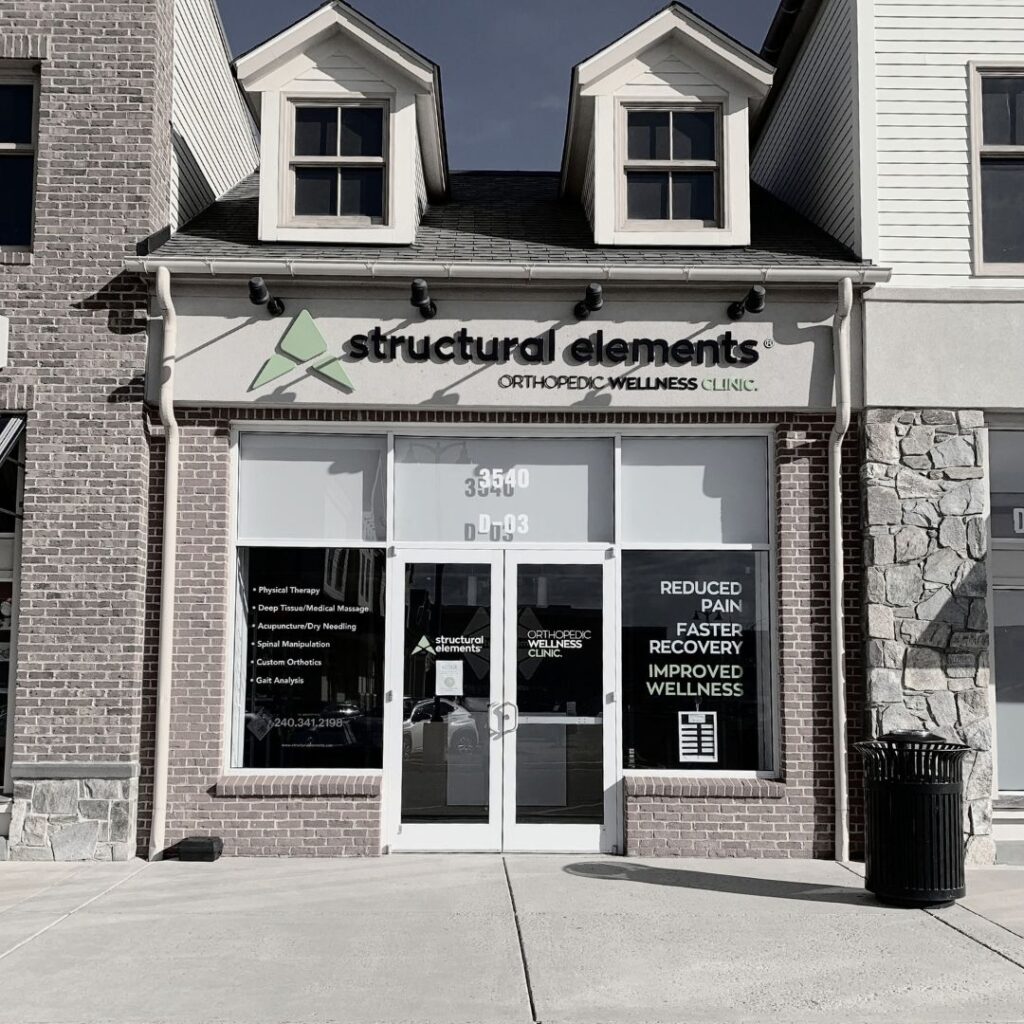
Structural Elements® began with Founder Doug Bertram: one practitioner, one clinical practice, decades of experience, and a proprietary treatment approach he had developed along the way.
And it easily could have stopped there.
Doug could have continued changing lives in one community, one patient at a time. That alone would have been meaningful work.
But his vision was bigger.
He had an unrelenting desire to bring better orthopedic care to more people and, ultimately, to change the healthcare landscape itself. Not just for patients, but for providers too. He believed better care required more than a better treatment approach. It required a better way of delivering care.
And somehow, that very big vision led to a very simple Google search:
“Is my business franchisable?”
The answer set something much bigger in motion.
Doug began exploring franchising as a way to protect the intellectual property behind his work while creating a pathway to bring it into more communities. The work came first. Franchising became the structure that could help preserve it, teach it, establish standards around it, and ultimately allow it to reach far beyond a single clinic.
So we built the franchise system. We wrote the operations manuals. We hired the legal team. We invested in the infrastructure, sales, and growth teams needed to take Structural Elements® beyond a single location.
And just as we were ready to officially launch, a global pandemic hit.
THE DISRUPTION THAT CHANGED THE MODEL
COVID disrupted both industries we were attempting to bring together at exactly the same time. Healthcare delivery changed almost overnight, while brick-and-mortar franchise growth stalled. For a healthcare franchise built around physical clinics and in-person care, the timing could hardly have been more challenging.
Plans changed. Growth slowed. But unexpectedly, we gained something we hadn’t planned for: time.
Whether we wanted it or not, we now had time. Time to pause before scaling what we had already built and ask how it could be even better. We expanded and better integrated our services, bringing treatment, movement, recovery, and other areas of Orthopedic Wellness into a more connected system. We also evolved the experience and business model for our providers.
And while Structural Elements® was evolving, the world around us was changing too.
Consumers became more proactive about their health and more willing to invest in prevention, recovery, wellness, and eventually longevity. Providers began asking harder questions about autonomy, professional longevity, and how they wanted to practice. And within franchising, health and wellness was rapidly becoming a major growth category, as the market began expanding beyond the single-service concepts that had long dominated the space.
All of those shifts were happening at once.
Looking back, had we simply launched and scaled the model we had built before COVID, Structural Elements® might not be here today. Instead, we had the opportunity to pause and make a strong model even better, while the market around us was becoming increasingly ready for it.
The model evolved. The market evolved. And today, those two trajectories are meeting at exactly the right time.
FRANCHISING AS STEWARDSHIP
Franchising is often thought of primarily as a vehicle for growth. Build a successful concept, create a repeatable model, and bring it into new markets.
But that’s only part of what franchising can do.
For Structural Elements®, it has also become a framework for stewardship.
The same structure that initially allowed us to protect Doug’s intellectual property now gives us a way to maintain standards, provide consistent training, support quality, and create accountability across a much broader system.
That matters because we aren’t simply interested in putting the Structural Elements® name on more buildings. We want that name to continue to mean something. As the services within Structural Elements® expand and the system itself continues to evolve, there still needs to be a recognizable philosophy and standard connecting it all.
The question, then, isn’t simply how do we grow? It’s how do we grow responsibly?
Franchising gives us a framework for doing exactly that.
BUILDING A DIFFEREMT KIND OF HEALTHCARE MODEL
But protecting the work is only one piece of the story. What emerged was also a different way of structuring a healthcare business.
Exceptional patient care is the goal. But creating the conditions for exceptional care means thinking about more than the patient experience alone. It means asking what providers need in order to do their best work and what owners need in order to build businesses capable of supporting that work.
Traditional healthcare doesn’t always align those interests particularly well.
So we began asking different questions. Could providers have greater autonomy without having to build a practice entirely on their own? Could clinic owners create businesses around a network of entrepreneurial healthcare professionals rather than a traditional employment model? Could different disciplines work within one connected system instead of simply occupying space beside one another?
And what would happen for the patient if we got those pieces right?
That thinking helped shape the Structural Elements® model that exists today.
Providers gain the opportunity to build their own practices with greater support and connection. Owners gain a model designed around bringing multiple healthcare professionals and services together. And practitioners have greater opportunities to communicate, collaborate, and refer within a shared system.
The patient experiences the benefit of all of it.
Treatment, movement, recovery, medical services, and other areas of Orthopedic Wellness can exist within one connected environment, creating something increasingly difficult to find in healthcare: continuity of care.
Patients don’t need to understand the business structure behind it. They simply experience a system designed to see more of the whole picture.
That’s where the business model and the care model intersect.
THE BUSINESS MODEL MATTERS
When we talk about innovation in healthcare, we tend to focus on what happens clinically: new treatments, technologies, diagnostics, medications, and new ways of understanding the human body.
But some of the most meaningful innovation may need to happen in the structure surrounding care.
The way a healthcare business is built influences who is able to practice within it, how providers work together, what kind of experience patients receive, and whether a successful approach can expand without losing what made it successful in the first place.
That’s why we’ve never been interested in simply forcing Structural Elements® into a conventional healthcare model or a conventional franchise formula. We’ve continued to evolve both sides together.
And that hasn’t always made the model easy to explain.
Healthcare is complicated. People are complicated. Our model is different. Our model is complicated. It is cash-based. It brings together healthcare and franchising in ways that don’t always fit neatly into familiar categories.
But perhaps it needed to be different.
Building something intended to create better systems for providers, better opportunities for owners, and ultimately better outcomes for patients was never going to be as simple as replicating a single service inside identical four walls.
So here we are, once again looking toward growth. But the mission is much bigger than putting more clinics on a map. It’s about bringing a different model of Orthopedic Wellness into more communities, creating meaningful opportunities for providers and owners, and continuing to raise the standard of what patients can expect from their care.
Franchising isn’t simply how we grow. It’s how we take a mission that could have stopped with one guy, in one clinic, and give it the opportunity to become something much bigger.
What once seemed like an almost impossible task now feels like an idea whose time has come.