

CREATING THE CONDITIONS FOR HEALING
Few terms have gained more momentum in healthcare over the past several years than regenerative medicine. It’s appearing at healthcare conferences, in orthopedic clinics, sports medicine practices, functional medicine offices, aesthetic medicine, and countless online conversations. But as its popularity has grown, so has the confusion surrounding what regenerative medicine actually is.
For some, regenerative medicine has become synonymous with PRP, peptides, exosomes, or the latest biologic therapy making headlines. Others see it simply as an alternative to surgery or another option for managing pain. While these perspectives contain elements of truth, they don’t tell the whole story.
At Structural Elements®, we believe regenerative medicine deserves a more thoughtful definition, especially within orthopedic wellness
We don’t see regenerative medicine as a product, a procedure, or even a collection of therapies. We see it as a different way of thinking.
Rather than asking, “What treatment should we perform?” we begin with a different question:
“What does this person’s body need to heal, adapt, and function at its highest potential?”
That shift changes everything.
IT STARTS WITH UNDERSTANDING THE PATIENT
At its core, regenerative medicine is an approach to care that supports 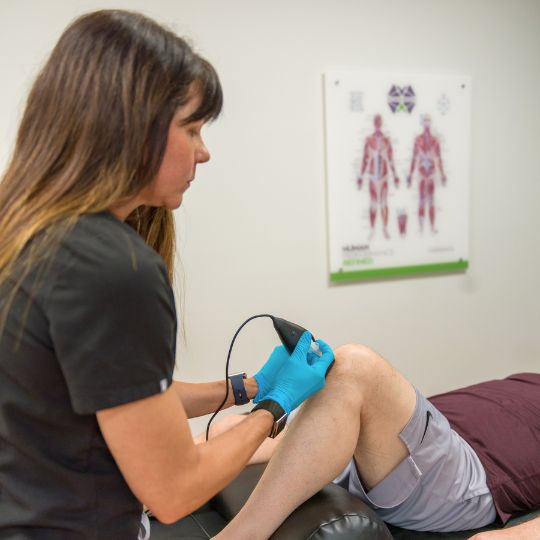 the body’s natural ability to repair, adapt, and recover. Rather than simply managing symptoms or treating a diagnosis, regenerative medicine asks why healing has slowed, what biological barriers exist, and what conditions need to change to support healthier tissue and better long-term function.
That means regenerative medicine should never begin with a treatment recommendation. It begins with understanding the patient.
A thoughtful orthopedic evaluation, diagnostic imaging and comprehensive biomarker assessment all help create a clearer picture of what’s happening beneath the surface. They allow providers to move beyond identifying where something hurts and begin understanding why it hurts, what may be preventing recovery, and whether regenerative medicine is even the right path forward.
Only then can the most appropriate strategy be considered.
For some patients, that may include platelet-rich plasma (PRP) or hyaluronic acid (HA). As research continues to evolve and additional therapies become clinically appropriate, regenerative medicine also includes exosomes, peptides, and other biologic interventions. These therapies represent exciting advances, but they are only one part of the larger picture.
The intervention itself is not regenerative medicine. The clinical reasoning behind it is.
This idea has guided the way we think about patient care at Structural Elements® for years. As our founder, Doug Bertram, often says, “I don’t heal the body. I help it achieve a state of self-regulation.”
That distinction is fundamental. Regenerative medicine is not about a provider healing the body through a single procedure. It is about using thoughtful, evidence-informed interventions to help create the conditions in which the body can do what it was designed to do…heal, adapt, and restore function.
The treatment matters, but its role is to support the body’s own capacity for repair, not replace it.
CONTEXT CHANGES THE OUTCOME
This is where we believe regenerative medicine begins to separate itself from being simply another treatment option. Healing rarely happens because of one intervention alone. It happens because the entire environment supports recovery.
Movement influences tissue remodeling. Recovery influences adaptation. Sleep, nutrition, inflammation, circulation, stress, biomechanics, metabolic health, and tissue loading all affect the body’s ability to heal. Diagnostics, imaging, and biomarkers help us understand the factors influencing recovery, while regenerative therapies may help create the biological conditions for repair. Together, these pieces provide a far more complete understanding of orthopedic health than any single intervention ever could.
In other words, context matters as much as the treatment.
CONTINUITY OF CARE MATTERS
This philosophy is exactly why regenerative medicine has become part of our Orthopedic Wellness service line.
Not because it’s the newest trend in healthcare, but because it naturally belongs within a larger system of care.
At Structural Elements®, regenerative medicine is part of a true orthopedic wellness ecosystem designed around one core principle: continuity of care.
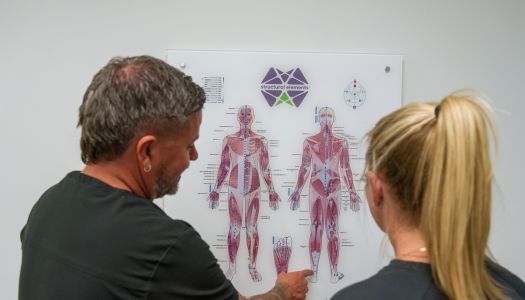 Too often, patients become the link between disconnected providers by repeating their history from scratch, relaying recommendations from doctor to doctor, and trying to piece together a treatment plan across multiple offices. We believe the healthcare system, not the patient, should carry that responsibility. In our system, an (se)® Treatment provider can share structural findings with a regenerative medicine provider before an intervention is ever recommended. A regenerative medicine provider and IV Therapy nurse can collaborate on therapies that support healing and recovery as part of a larger care plan. Movement providers help restore mechanics and improve tissue loading, while our Recovery & Performance services help create an environment that supports adaptation throughout the healing process.
Rather than sending patients from one siloed office to another, we coordinate care within one integrated system where providers communicate, build upon one another’s expertise, and keep the patient’s long-term goals at the center of every decision.
The result isn’t simply convenience. It’s continuity of care.
And we believe continuity is one of the most important ingredients in modern orthopedic wellness.
THE FUTURE OF REGENERATIVE MEDICINE IN ORTHOPEDICS
We believe regenerative medicine represents one of the most exciting developments in orthopedic healthcare, not because it introduces another procedure, but because it reflects a broader shift in how we think about healing.
The future of orthopedic wellness will not be defined by a single injection, technology, or biologic therapy. It will be defined by systems that combine thoughtful clinical reasoning with the right diagnostics, regenerative interventions, movement strategies, recovery support, and collaborative care to create truly personalized treatment.
That is the future we are building at Structural Elements®.
As regenerative medicine becomes part of our Orthopedic Wellness service line at our flagship Hagerstown clinic, and eventually throughout future Structural Elements® locations, it will continue to reflect the same philosophy that has guided our organization from the beginning.
Modern orthopedic care isn’t about choosing between treatments.
It’s about understanding the individual, selecting the right intervention at the right time, and creating the conditions that give every patient the greatest opportunity to heal.
Because regenerative medicine isn’t simply changing orthopedic treatments. It’s changing the way orthopedic care can be delivered.