
MOVEMENT AS MEDICINE:
WHY BUILDING RESILIENCE STARTS WITH HOW YOU MOVE
You hear it everywhere: “Don’t stop moving.” “If you stop moving, you age faster.”
There is truth in that idea. Movement plays a critical role in maintaining strength, mobility, and long-term health. But what is often missing from that conversation is just as important: not all movement builds resilience.
Because movement isn’t just something we do in a workout.
We are moving all day, every day.
Sitting at a desk, walking through a store, reaching, turning, and shifting positions are all expressions of how the body organizes and moves. Even when we’re not moving through space, our bodies are still stabilizing, adapting, and responding to demand.
And the way we move in those moments matters.
Some movement reinforces strength, coordination, and adaptability. Other movement reinforces compensation, imbalance, and breakdown. So while staying active matters, the real question becomes: what kind of movement actually supports the body?
In many cases, exercise becomes the default answer. But without understanding how the body moves, or how it should move, more activity doesn’t necessarily lead to better outcomes. It often reinforces the same patterns and compensations, leading to recurring issues over time.
Because movement alone isn’t the solution. HOW you move is what matters.
MOVEMENT IS NOT JUST EXERCISE
In traditional models, movement is often treated as a general recommendation. Patients are encouraged to stay active, build strength, and maintain mobility. While well-intentioned, this approach overlooks a critical factor: movement is not just activity, it is a clinical strategy.
The way the body moves reflects how it is organized, how it stabilizes, how it produces force, and how it adapts to stress. Without addressing movement patterns, even well-designed exercise programs can reinforce the very issues they aim to solve. This is why many people feel better temporarily, only to experience discomfort again when they return to normal activity.
Progress doesn’t come from simply increasing activity. It comes from understanding how the body moves and using that understanding to move with intention.
BUILDING MOVEMENT LITERACY
At Structural Elements®, movement is not approached as a workout. It is an educational process.
We believe one of the most valuable skills a person can develop is movement literacy; the ability to understand, feel, and control how their body moves. This includes awareness of alignment, the ability to create and control movement, recognition of compensation patterns, and the development of coordination and adaptability.
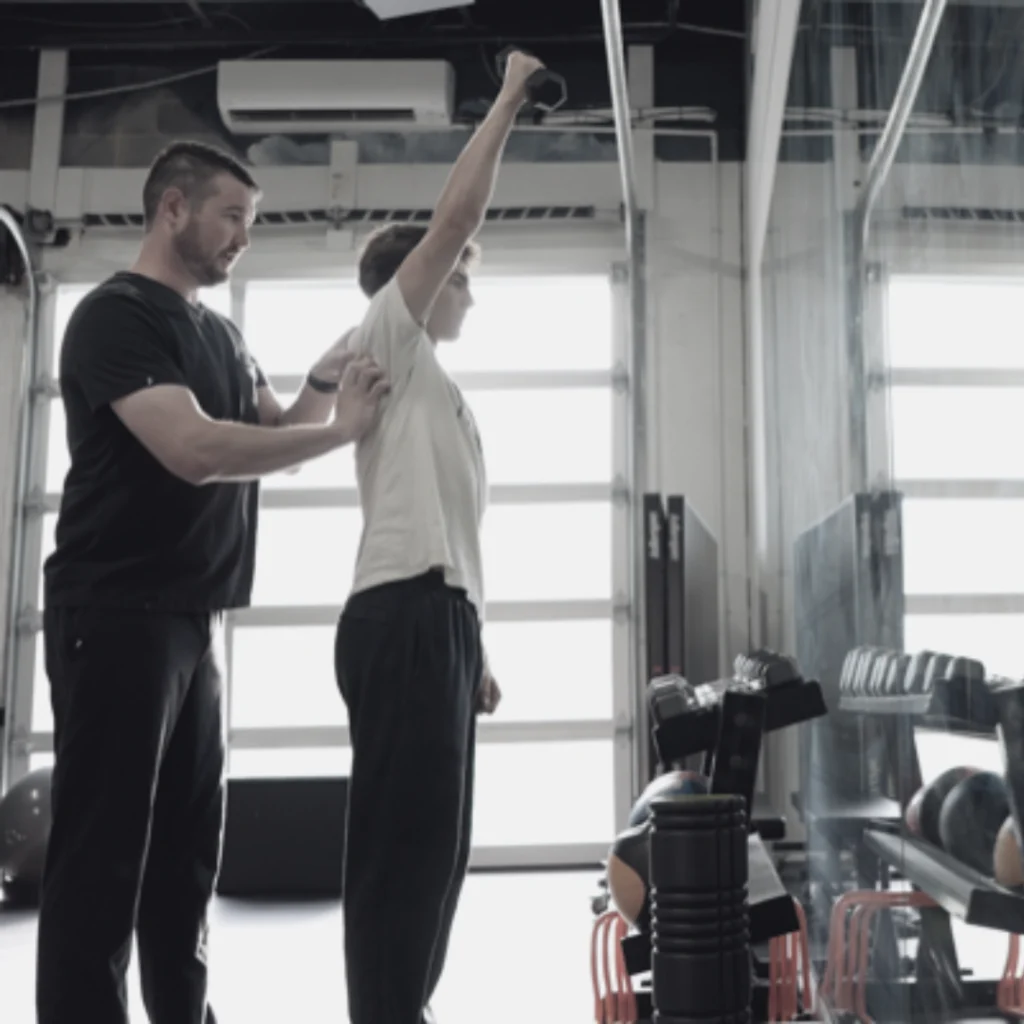
This approach is consistent across all of our (se)® movement providers. Regardless of how someone engages in movement, whether through one-on-one sessions, small groups, or classes the goal is not simply to guide someone through exercises, but to help them understand their body and how to support it over time. Our movement team, which can include Physical or Occupational Therapists, Athletic Trainers, Personal Trainers, and Pilates or yoga instructors, receives additional training in the proprietary Structural Elements® model, just like our manual therapists and medical providers.
Rather than reinforcing a single method or style, providers guide clients across different phases of care, allowing movement to adapt alongside the individual as their needs evolve.
This is where the somatic aspect of movement becomes essential. Instead of simply performing exercises, individuals learn to feel how their body organizes, where it compensates, and how small adjustments create more efficient, supported movement. Over time, this strengthens the connection between the body and nervous system, allowing movement to become more intentional and sustainable.
Because when people understand their bodies, they don’t just move more, they move with purpose.
MANY PATHS INTO MOVEMENT
Not every body needs the same starting point, and not every person connects with movement in the same way. At Structural Elements®, movement exists within an integrated system that offers multiple entry points based on individual needs, goals, and preferences.
Within the (se)® LAB, movement is delivered through clinically informed services like (se)® Balance–Mobility–Strength (BMS), offered 1:1 and in small groups. These sessions build coordination, control, and strength in ways that directly support real-life movement. Blood Flow Restriction (BFR) training provides another pathway, allowing strength development with lower loads which is ideal for those recovering from injury or unable to tolerate higher joint stress. The medical-grade Vibration Plate offers an additional entry point, supporting circulation, neuromuscular activation, and movement for individuals who may not yet tolerate traditional loading.
Movement also extends into the (se)® Pilates system, where the full apparatus allows for a precise and adaptable approach to strength and control. Pilates reinforces alignment, coordination, and full-body integration while meeting individuals where they are. The (se)® Studio provides a group-based environment that blends movement, mindfulness, and accessibility, helping people build consistency, confidence, and long-term habits.
Together, these offerings create something often missing in traditional models: choice within a system. Individuals are not confined to a single approach but are guided toward the type of movement that best supports their body, and that guidance evolves over time.
QUALITY OVER INTENSITY
Modern fitness culture often emphasizes intensity, volume, and output. But resilience is not built through intensity alone. It is built through quality, control, and adaptability.
At Structural Elements®, movement prioritizes coordination over compensation, control before complexity, and adaptability over repetition. This allows the body to tolerate load more effectively, distribute force efficiently, and respond to stress without breaking down. It also creates a foundation where strength and performance can develop without reinforcing dysfunctional patterns.
Over time, movement that lacks control or awareness limits progress rather than supporting it.
MOVEMENT AS THE BRIDGE
Movement connects the phases of care. It translates the changes created through treatment into function, prepares the body for daily demands and performance, and supports long-term adaptation.
Without movement, treatment doesn’t hold. Without movement, recovery lacks direction.
Movement is the bridge between pain relief and long-term resilience, but it is also a starting point for many people entering care. Wherever someone begins, movement plays a central role in building and sustaining capacity.
AN AND, NOT AN EITHER/OR
Movement at Structural Elements® is not designed to replace what people already enjoy. It is designed to support it.
Whether someone is going to a traditional gym, participating in sports, training for competition, or staying active in daily life, the goal is not to pull them away from those environments. It is to help them move more effectively within them.
Structural Elements® is not an either/or.
It is an AND.
We help people build the awareness, control, and resilience that allow them to continue doing what they enjoy more efficiently, more confidently, and with less risk of breakdown.
Movement is not just something we do. It is something we are doing all day, every day. When movement is approached with awareness, intention, and the right support, it becomes more than exercise. It becomes a tool for building resilience, supporting performance, and maintaining long-term health.
That is where better outcomes are created.